前書き
前回の記事では、Linuxシステムでのパッケージの構築とインストールについて説明しました。ここでは、Linuxカーネルモジュール(LKM)について説明し、パッケージへのパスとその作成について後で詳細を明らかにすることを約束しました。さて、彼の時が来ました。LKM-私たちはあなたを選びます。
実装の必要性
「WindowsドライバーをLinuxカーネルモジュールLKMに置き換えました...」それでは、精神的にパスの最初に戻りましょう。ファイルアクセスイベントを監視および傍受するWindowsドライバがあります。Linuxシステムでそれを移植する方法またはそれを置き換える方法は?アーキテクチャを掘り下げて、Linuxでのそのようなテクノロジーの傍受と実装について読んだところ、このタスクは非常に簡単ではなく、多くの落とし穴が含まれていることがわかりました。
Inotify
, , «» Inotify. Inotify – , , . «» – fanotify. , . , , , , , fanotify . , fanotify – userspace , .
Virtual File System

VFS.
VFS Dtrace, eBPF bcc, , , . , LKM. :
• ;
• , , ;
• .
Janus, SElinux AppArmor
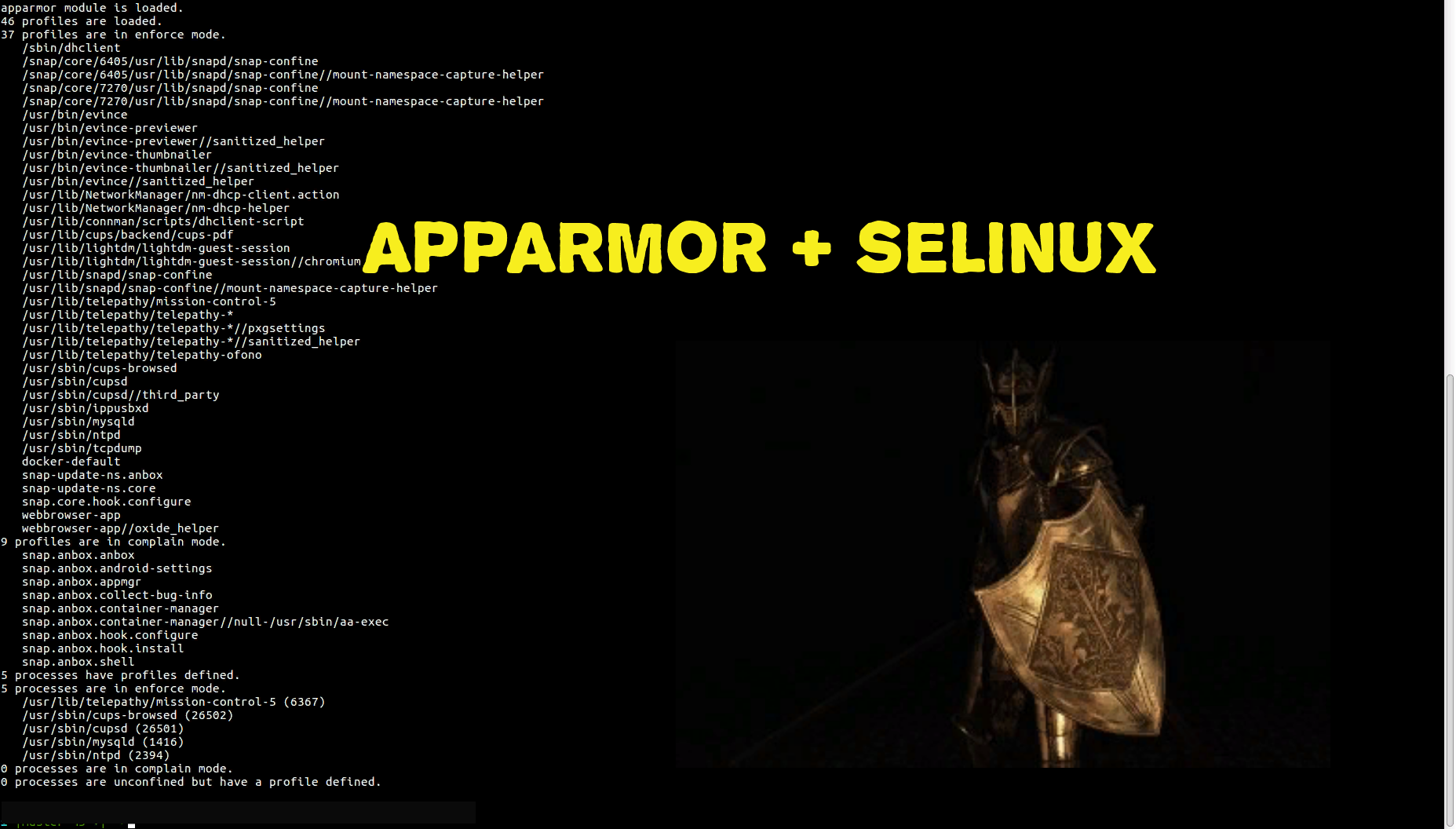
, Linux. , . Janus. LKM . SELinux AppArmor . SELinux :
• ;
• (. Access Vector Cache, AVC);
• ;
• ;
• (selinuxfs) -.
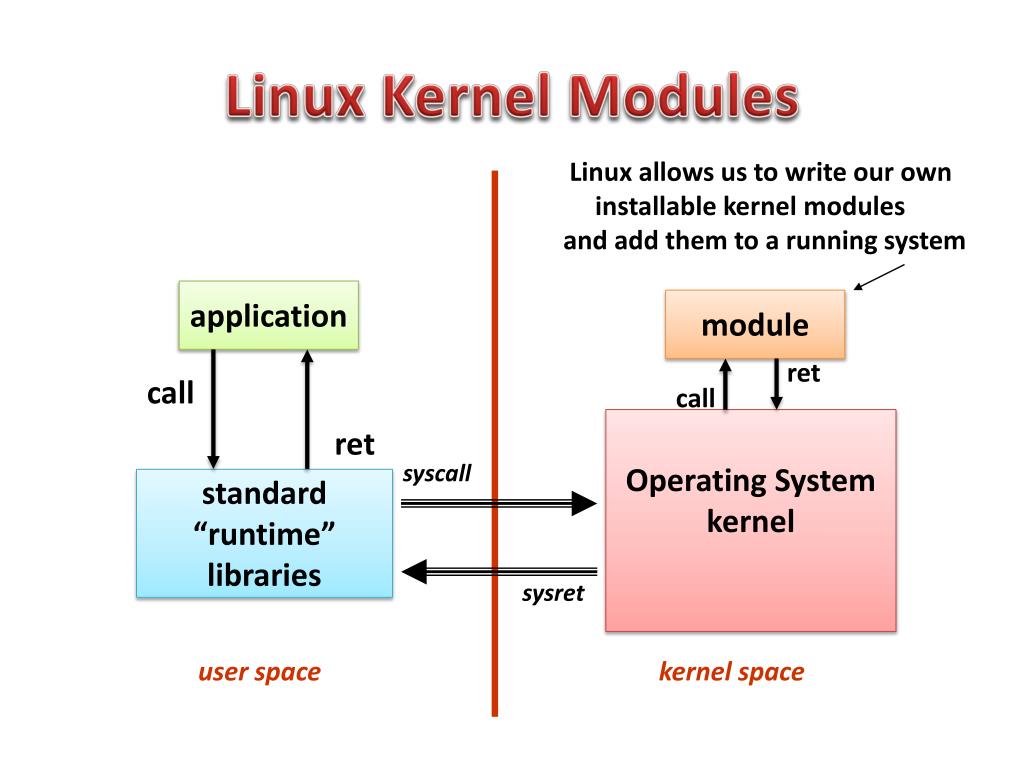
ftrace , LKM ftrace. , , debugfs, Linux . Hook' clone open:
• openat,
• rename,
• unlink,
• unlinkat.
, , , , , .

userspace. , :
• socket kernel userspace;
• / .
, netlink socket, Windows - FltSendMessage. inet socket, . , .Net Core, userspace , netlink.
netlink .
int open_netlink_connection(void)
{
//initialize our variables
int sock;
struct sockaddr_nl addr;
int group = NETLINK_GROUP;
//open a new socket connection
sock = socket(AF_NETLINK, SOCK_RAW, NETLINK_USERSOCK);
//if the socket failed to open,
if (sock < 0)
{
//inform the user
printf("Socket failed to initialize.\n");
//return the error value
return sock;
}
//initialize our addr structure by filling it with zeros
memset((void *) &addr, 0, sizeof(addr));
//specify the protocol family
addr.nl_family = AF_NETLINK;
//set the process id to the current process id
addr.nl_pid = getpid();
//bind the address to the socket created, and if it failed,
if (bind(sock, (struct sockaddr *) &addr, sizeof(addr)) < 0)
{
//inform the user
printf("bind < 0.\n");
//return the function with a symbolic error code
return -1;
}
//set the option so that we can receive packets whose destination
//is the group address specified (so that we can receive the message broadcasted by the kernel)
if (setsockopt(sock, 270, NETLINK_ADD_MEMBERSHIP, &group, sizeof(group)) < 0)
{
//if it failed, inform the user
printf("setsockopt < 0\n");
//return the function with a symbolic error code
return -1;
}
//if we got thus far, then everything
//went fine. Return our socket.
return sock;
}
char* read_kernel_message(int sock)
{
//initialize the variables
//that we are going to need
struct sockaddr_nl nladdr;
struct msghdr msg;
struct iovec iov;
char* buffer[CHUNK_SIZE];
char* kernelMessage;
int ret;
memset(&msg, 0, CMSG_SPACE(MAX_PAYLOAD));
memset(&nladdr, 0, sizeof(nladdr));
memset(&iov, 0, sizeof(iov));
//specify the buffer to save the message
iov.iov_base = (void *) &buffer;
//specify the length of our buffer
iov.iov_len = sizeof(buffer);
//pass the pointer of our sockaddr structure
//that will save the source IP and port of the connection
msg.msg_name = (void *) &(dest_addr);
//give the size of our structure
msg.msg_namelen = sizeof(dest_addr);
//pass our scatter/gather I/O structure pointer
msg.msg_iov = &iov;
//we will pass only one buffer array,
//therefore we will specify that here
msg.msg_iovlen = 1;
//listen/wait for new data
ret = recvmsg(sock, &msg, 0);
//if message was received successfully,
if(ret >= 0)
{
//get the string data and save them to a local variable
char* buf = NLMSG_DATA((struct nlmsghdr *) &buffer);
//allocate memory for our kernel message
kernelMessage = (char*)malloc(CHUNK_SIZE);
//copy the kernel data to our allocated space
strcpy(kernelMessage, buf);
//return the pointer that points to the kernel data
return kernelMessage;
}
//if we got that far, reading the message failed,
//so we inform the user and return a NULL pointer
printf("Message could not received.\n");
return NULL;
}
int send_kernel_message(int sock, char* kernelMessage)
{
//initialize the variables
//that we are going to need
struct msghdr msg;
struct iovec iov;
char* buffer[CHUNK_SIZE];
int ret;
memset(&msg, 0, CMSG_SPACE(MAX_PAYLOAD));
memset(&iov, 0, sizeof(iov));
nlh = (struct nlmsghdr *)malloc(NLMSG_SPACE(MAX_PAYLOAD));
memset(nlh, 0, NLMSG_SPACE(MAX_PAYLOAD));
nlh->nlmsg_len = NLMSG_SPACE(MAX_PAYLOAD);
nlh->nlmsg_pid = getpid();
nlh->nlmsg_flags = 0;
char buff[160];
snprintf(buff, sizeof(buff), "From:DSSAgent;Action:return;Message:%s;", kernelMessage);
strcpy(NLMSG_DATA(nlh), buff);
iov.iov_base = (void *)nlh;
iov.iov_len = nlh->nlmsg_len;
//pass the pointer of our sockaddr structure
//that will save the source IP and port of the connection
msg.msg_name = (void *) &(dest_addr);
//give the size of our structure
msg.msg_namelen = sizeof(dest_addr);
msg.msg_iov = &iov;
msg.msg_iovlen = 1;
printf("Sending message to kernel (%s)\n",(char *)NLMSG_DATA(nlh));
ret = sendmsg(sock, &msg, 0);
return ret;
}
int sock_netlink_connection()
{
sock_fd = socket(PF_NETLINK, SOCK_RAW, NETLINK_USER);
if (sock_fd < 0)
return -1;
memset(&src_addr, 0, sizeof(src_addr));
src_addr.nl_family = AF_NETLINK;
src_addr.nl_pid = getpid(); /* self pid */
bind(sock_fd, (struct sockaddr *)&src_addr, sizeof(src_addr));
memset(&dest_addr, 0, sizeof(dest_addr));
dest_addr.nl_family = AF_NETLINK;
dest_addr.nl_pid = 0; /* For Linux Kernel */
dest_addr.nl_groups = 0; /* unicast */
nlh = (struct nlmsghdr *)malloc(NLMSG_SPACE(MAX_PAYLOAD));
memset(nlh, 0, NLMSG_SPACE(MAX_PAYLOAD));
nlh->nlmsg_len = NLMSG_SPACE(MAX_PAYLOAD);
nlh->nlmsg_pid = getpid();
nlh->nlmsg_flags = 0;
strcpy(NLMSG_DATA(nlh), "From:DSSAgent;Action:hello;");
iov.iov_base = (void *)nlh;
iov.iov_len = nlh->nlmsg_len;
msg.msg_name = (void *)&dest_addr;
msg.msg_namelen = sizeof(dest_addr);
msg.msg_iov = &iov;
msg.msg_iovlen = 1;
printf("Sending message to kernel\n");
sendmsg(sock_fd, &msg, 0);
printf("Waiting for message from kernel\n");
/* Read message from kernel */
recvmsg(sock_fd, &msg, 0);
printf("Received message payload: %s\n", (char *)NLMSG_DATA(nlh));
return sock_fd;
}
void sock_netlink_disconnection(int sock)
{
close(sock);
free(nlh);
}
, , Net.Core – pid , . , , , . uid , .
char* get_username_by_pid(int pid)
{
register struct passwd *pw;
register uid_t uid;
int c;
FILE *fp;
char filename[255];
sprintf(filename, "/proc/%d/loginuid", pid);
char cc[8];
//
if((fp= fopen(filename, "r"))==NULL)
{
perror("Error occured while opening file");
return "";
}
// ,
while((fgets(cc, 8, fp))!=NULL) {}
fclose(fp);
uid = atoi(cc);
pw = getpwuid (uid);
if (pw)
{
return pw->pw_name;
}
else
{
return "";
}
}
netlink LKM.
static int fh_init(void)
{
int err;
struct netlink_kernel_cfg cfg =
{
#if LINUX_VERSION_CODE >= KERNEL_VERSION(3, 6, 0)
.groups = 1,
#endif
.input = nl_recv_msg,
};
#if LINUX_VERSION_CODE > KERNEL_VERSION(2, 6, 36)
nl_sk = netlink_kernel_create(&init_net, NETLINK_USER, &cfg);
#elif LINUX_VERSION_CODE >= KERNEL_VERSION(2, 6, 32)
nl_sk = netlink_kernel_create(&init_net, NETLINK_USER, 0, nl_recv_msg, NULL, THIS_MODULE);
#else
nl_sk = netlink_kernel_create(NETLINK_USER, 0, nl_recv_msg, THIS_MODULE);
#endif
if (!nl_sk)
{
printk(KERN_ERR "%s Could not create netlink socket\n", __func__);
return 1;
}
err = fh_install_hooks(hooks, ARRAY_SIZE(hooks));
if (err)
return err;
p_list_hook_files = (tNode *)kmalloc(sizeof(tNode), GFP_KERNEL);
p_list_hook_files->next = NULL;
p_list_hook_files->value = 0;
pr_info("module loaded\n");
return 0;
}
module_init(fh_init);
static void fh_exit(void)
{
delete_list(p_list_hook_files);
fh_remove_hooks(hooks, ARRAY_SIZE(hooks));
netlink_kernel_release(nl_sk);
pr_info("module unloaded\n");
}
module_exit(fh_exit);
Socket . , , , pid . Userspace , , , ( ). .
static void send_msg_to_user(const char *msgText)
{
int msgLen = strlen(msgText);
struct sk_buff *skb = nlmsg_new(NLMSG_ALIGN(msgLen), GFP_KERNEL);
if (!skb)
{
printk(KERN_ERR "%s Allocation skb failure.\n", __func__);
return;
}
struct nlmsghdr *nlh = nlmsg_put(skb, 0, 1, NLMSG_DONE, msgLen, 0);
if (!nlh)
{
printk(KERN_ERR "%s Create nlh failure.\n", __func__);
nlmsg_free(skb);
return;
}
NETLINK_CB(skb).dst_group = 0;
strncpy(nlmsg_data(nlh), msgText, msgLen);
int errorVal = nlmsg_unicast(nl_sk, skb, pid);
if (errorVal < 0)
printk(KERN_ERR "%s nlmsg_unicast() error: %d\n", __func__, errorVal);
}
static void return_msg_to_user(struct nlmsghdr *nlh)
{
pid = nlh->nlmsg_pid;
const char *msg = "Init socket from kernel";
const int msg_size = strlen(msg);
struct sk_buff *skb = nlmsg_new(msg_size, 0);
if (!skb)
{
printk(KERN_ERR "%s Failed to allocate new skb\n", __func__);
return;
}
nlh = nlmsg_put(skb, 0, 0, NLMSG_DONE, msg_size, 0);
NETLINK_CB(skb).dst_group = 0;
strncpy(nlmsg_data(nlh), msg, msg_size);
int res = nlmsg_unicast(nl_sk, skb, pid);
if (res < 0)
printk(KERN_ERR "%s Error while sending back to user (%i)\n", __func__, res);
}
, , ( ) , ( pid ).
static void parse_return_from_user(char *return_msg)
{
char *msg = np_extract_value(return_msg, "Message", ';');
const char *file_name = strsep(&msg, "|");
printk(KERN_INFO "%s Name:(%s) Permiss:(%s)\n", __func__, file_name, msg);
if (strstr(msg, "Deny"))
reload_name_list(p_list_hook_files, file_name, Deny);
else
reload_name_list(p_list_hook_files, file_name, Allow);
}
static void free_guards(void)
{
// Possibly unpredictable behavior during cleaning
memset(&guards, 0, sizeof(struct process_guards));
}
static void change_guards(char *msg)
{
char *path = np_extract_value(msg, "Path", ';');
char *count_str = np_extract_value(msg, "Count", ';');
if (path && strlen(path) && count_str && strlen(count_str))
{
int i, found = -1;
for (i = 0; i < guards.count; ++i)
if (guards.process[i].file_path && !strcmp(path, guards.process[i].file_path))
found = i;
guards.is_busy = 1;
int count;
kstrtoint(count_str, 10, &count);
if (count > 0)
{
if (found == -1)
{
strcpy(guards.process[guards.count].file_path, path);
found = guards.count;
guards.count++;
}
for (i = 0; i < count; ++i)
{
char buff[8];
snprintf(buff, sizeof(buff), "Pid%d", i + 1);
char *pid = np_extract_value(msg, buff, ';');
if (pid && strlen(pid))
kstrtoint(pid, 10, &guards.process[found].allow_pids[i]);
else
guards.process[found].allow_pids[i] = 0;
}
guards.process[found].allow_pids[count] = 0;
}
else
{
if (found >= 0)
{
for (i = found; i < guards.count - 1; ++i)
guards.process[i] = guards.process[i + 1];
guards.count--;
}
}
guards.is_busy = 0;
}
}
// Example message is "From:CryptoCli;Action:clear;" or "From:DSSAgent;Action:init;"
static void nl_recv_msg(struct sk_buff *skb)
{
printk(KERN_INFO "%s <--\n", __func__);
struct nlmsghdr *nlh = (struct nlmsghdr *)skb->data;
printk(KERN_INFO "%s Netlink received msg payload:%s\n", __func__, (char *)nlmsg_data(nlh));
char *msg = (char *)nlmsg_data(nlh);
if (msg && strlen(msg))
{
char *from = np_extract_value(msg, "From", ';');
char *action = np_extract_value(msg, "Action", ';');
if (from && strlen(from) && action && strlen(action))
{
if (!strcmp(from, "DSSAgent"))
{
if (!strcmp(action, "init"))
{
return_msg_to_user(nlh);
}
else if (!strcmp(action, "return"))
{
parse_return_from_user(msg);
}
else
{
printk(KERN_ERR "%s Failed msg, \"From\" is %s and \"Action\" is %s\n", __func__, from, action);
}
}
else if (!strcmp(from, "CryptoCli"))
{
if (!strcmp(action, "clear"))
{
free_guards();
}
else if (!strcmp(action, "change"))
{
change_guards(msg);
}
else
{
printk(KERN_ERR "%s Failed msg, \"From\" is %s and \"Action\" is %s\n", __func__, from, action);
}
}
else
{
printk(KERN_ERR "%s Failed msg, \"From\" is %s and \"Action\" is %s\n", __func__, from, action);
}
}
else
{
printk(KERN_ERR "%s Failed parse msg, don`t found \"From\" and \"Action\" (%s)\n", __func__, msg);
}
}
else
{
printk(KERN_ERR "%s Failed parse struct nlmsg_data, msg is empty\n", __func__);
}
printk(KERN_INFO "%s -->\n", __func__);
}
static bool check_file_access(char *fname, int processPid)
{
if (fname && strlen(fname))
{
int i;
for (i = 0; i < guards.count; ++i)
{
if (!strcmp(fname, guards.process[i].file_path) && guards.process[i].allow_pids[0] != 0)
{
int j;
for (j = 0; guards.process[i].allow_pids[j] != 0; ++j)
if (processPid == guards.process[i].allow_pids[j])
return true;
return false;
}
}
// Not found filename in guards
if (strstr(fname, filetype))
{
char *processName = current->comm;
printk(KERN_INFO "%s service pid = %d\n", __func__, pid);
printk(KERN_INFO "%s file name = %s, process pid: %d, , process name = %s\n", __func__, fname, processPid, processName);
if (processPid == pid)
{
return true;
}
else
{
add_list(p_list_hook_files, processPid, fname, None);
char *buffer = kmalloc(4096, GFP_KERNEL);
sprintf(buffer, "%s|%s|%d", fname, processName, processPid);
send_msg_to_user(buffer);
kfree(buffer);
ssleep(5);
bool ret = true;
if (find_list(p_list_hook_files, fname) == Deny)
ret = false;
delete_node(p_list_hook_files, fname);
return ret;
}
}
}
return true;
}
LKM ftrace, . , , «». userspace . Linux , «», , «» system. .service , ExecStart ExecStop :
ExecStartPre=/bin/sh /__/prestart.sh ExecStopPost=/sbin/rmmod _.ko
prestart.sh:
#!/bin/sh
MOD_VAL=$(lsmod | grep _ | wc -l)
cd /___
make clean
make all
if [ $MOD_VAL = 1 ]
then
for proc in $(ps aux | grep DSS.Agent | awk '{print $2}'); do kill -9 $proc; done
else
/sbin/insmod / ___/_.ko
fi
, : , , , « », , Windows. . , . , DevOps, , Linux / LKM, Access Control List (ACL). , Linux. , , , , MS Forms Avalonia Linux.